Homemade sauerkraut recipe
[ad_1]
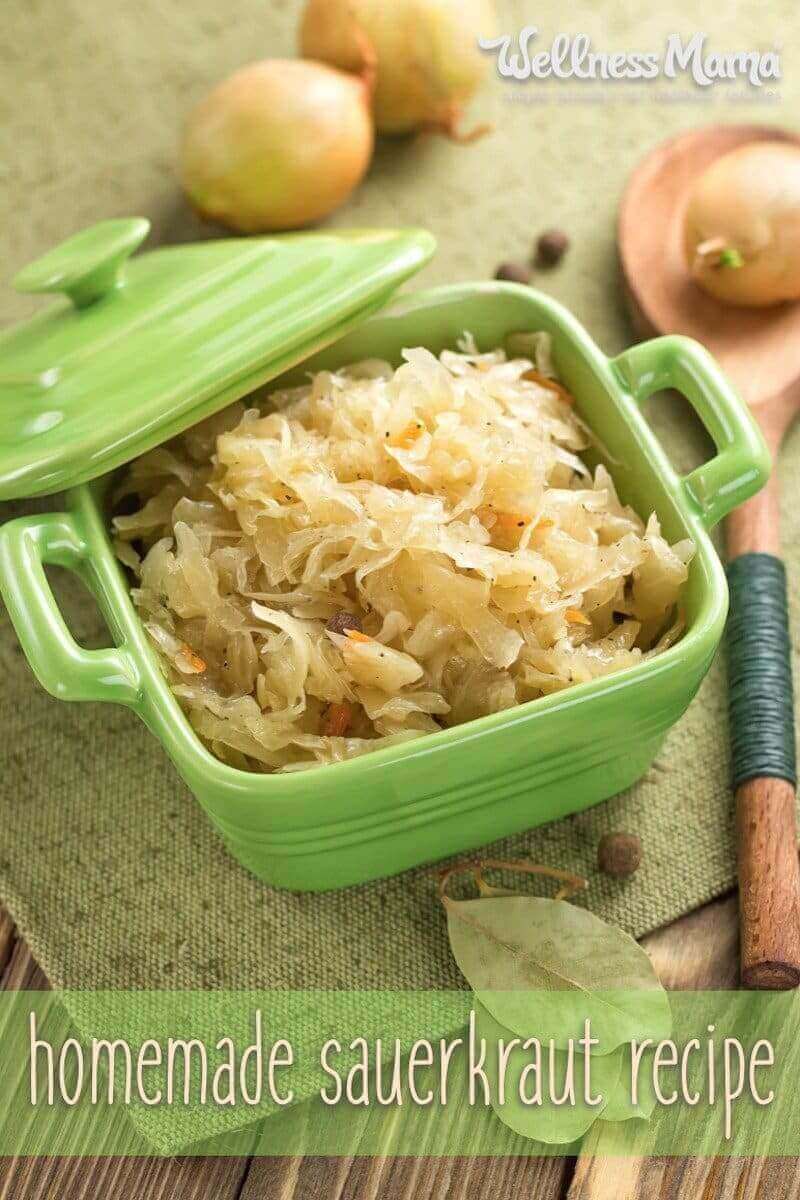
Fermentation is an age way to store food and increase their nutritional value. Translating a few pounds of cabbage into sauerkraut is one of the easiest foods. We love it as a side dish, on hot dogs, or even at the top of soups.
Why is this sauerkraut better for you? During fermentation, cabbage produces billions of useful bacteria. Because bacteria are homemade (and not pasteurized as in the grocery store), the bacteria are still alive and are ready to help our intestine.
Homemade sauerkraut is one of the cheapest and easiest ways to add probiotics to our diets!
Sour: Why do it make it from scratch?
In short, it is cheaper, healthier and so much tastier!
Because I'm ¼ German, I've always been love for sauerkraut. The problem is that it is difficult to find German restaurants in the fence. Of course, the logical solution was to make your own. The sauerkraut was the first thing I was brave enough to try and always has a special place in my heart (and at my counter).
The sauerkraut has all the benefits of traditional food, including the abundance of natural probiotics. Fermentation of lactic acids makes Kraut. In other words, useful Lactobacillus bacteria work hard to break down the cabbage into their delicious and salty finishes.
Manufacturers often cook stores purchased sauerkraut by killing useful bacteria. Few good brands like bubbles are great but expensive.
KRAut Preparation Process: Sour Rabbit 101
Sauerkraut simply means “sour cabbage” in German, but making a kraut does much more than just a cabbage sour!
As I mentioned, Lactobacillus bacteria are active workers in the process. These bacteria naturally occur in fruits, vegetables and even on our skin and body. They are generally considered harmless and even useful. Lactobacill also has two big qualities that make them perfect for fermentation:
- They can cope with an anaerobic environment (oxygen -free)
- They treat salt well, unlike many other bacteria
This gives us the opportunity to visit the cabbage under the salt water in an oxygen -free environment without killing Lactobacillus. Many other types of bacteria do not treat salt or oxygen deficient. The process of fermentation of lactic acids allows for good bacteria to remain and flourish while preventing bad bacteria.
If it sounds complicated so far, never be afraid … The recipe itself is a click!

Homemade sauerkraut recipe
Enjoy delicious, crispy, perfectly salty kraut for months! Make your own sauerkraut only 30 minutes of practical time. This traditional homemade sauerkraut is full of healthy probiotics.
- 2 ends cabbage (about 5 lbs)
- ¼ cup salt (See how tips below)
- 1-2 Small ship Mörow seeds (optional)
-
Wash all equipment, work surfaces and hands in warm soapy water.
-
Remove the exterior leaves and cores from the end of the cabbage. (Compost them if you can!) Slice the cabbage to a quarter to facilitate slicing. Then slice the thin cabbage into very thin strips with a mandolin, a knife or a cooking device.
-
Place the thinly shredded cabbage in a clean large bowl and sprinkle with sea salt over the cabbage. Knead and squeeze the cabbage magazine/salt at hand for about ten minutes. At first, it doesn't seem like it would do anything, but be patient. After a few minutes, the cabbage begins to release liquid, and for the end, the mixing bowl should have enough liquid to cover the cabbage with a crock or jar. Add the Möay seeds at this point if you use them.
-
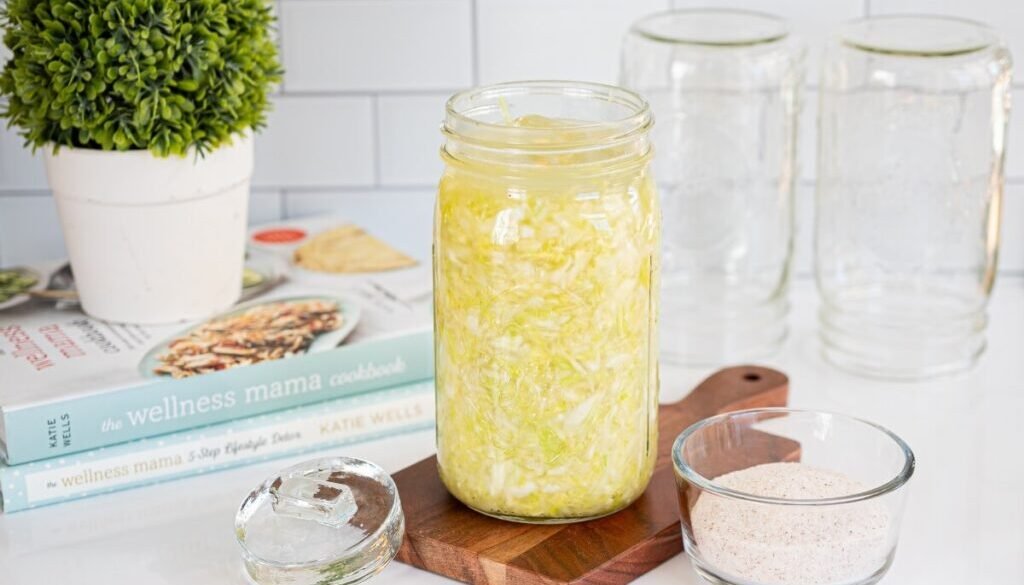
Pack the cabbage and karaway seeds (if you use) firmly in jars or fermentation. Pour any liquid from the bowl to the top of the jar. If necessary, add enough water to make sure that the salt water covers the cabbage completely. If the cabbage is fresh, no fluid is needed, but don't worry if you have to add a little water.
-
Add the fermentation weights and fermentation seal (or use fermentation chips as instructed). If you use a Mason Basic Can, you can also do this by adding a smaller jar that only fits inside the Mason jar lid and covering both jars with cloth and elastic band.
-
Let it run at room temperature for 2-5 weeks. Fermentation starts daily and lasts 2-5 weeks depending on the temperature and the desired oxygen. After two weeks, check the desired oxygen. The sauerkraut is technically a bit visiting only a few days, but the best taste seems to be 2-3 weeks. Taste is the best measure here, so check it frequently and stop fermentation when you get the desired taste.
-
Once the acid can be made immediately or stored in the refrigerator for up to six months.
-
Enjoy! The sauerkraut alone is delicious or added to salads, soups or meat.
Nutrition
Homemade sauerkraut recipe
Amount per dose (0.5 cups)
Calories 30
Calories from FAT 2
% Daily value*
Fat 0.2 g0%
Saturated fat 0.04 g0%
Polyunsaturated fat 0.03 g
Polyunsaturated fat 0.05 g
Sodium 1789 mg78%
Potassium 198mg6%
Carbohydrates 7g2%
Fiber 3g13%
Sugar 4g4%
Protein 2g4%
Vitamin A 113iu2%
Vitamin C 42 mg51%
Calcium 49 mg5%
Iron 1mg6%
* Percentage daily values are based on 2000 calorie diets.
It is normal to see bubbles, white foam or foam during fermentation. However, you should not see any real mold. If you do so, scratch it from above and make sure the rest of the cabbage is completely embedded. However, below all the level of salt water, the cabbage should be in good condition.
The right device has a big difference
Sauerkraut is difficult to mix, but the right device makes the process much easier! Because Kraut is one of the most budget -friendly real foods (with sardines), I have noticed that it is worth placing some inexpensive devices. In this way, it is easier to make it a regular part of the diet. There are several different methods to choose from.
Option 1: Good ol 'Mason jar
The sauerkraut method is made in a simple glass jar. Up to a fourth size masonry jar works. Many people choose a semi-gallon size to make more at once. You can use water -filled plastic bag to seal the jar from the air. Although my feelings of plastic are taken into account, I discourage this method. Instead, I recommend purchasing these devices:
- Glass outlet – These weights keep the cabbage under the water level of the salt water, which protects the fermentation environment. You can also do this with a small glass jar full of water or stones, as long as it fits into a larger jar.
- Fermentation – There are many options available for this. I have used and I love these silicone business covers.
I encourage you to have some kind of weight and some kind of fermentation cover. You can also use this device when making kimchi and pickles!
Option 2: Fermentation Crock
I prefer a more traditional method of sauerkraut to make a fermentation rock. First of all, you need to use cool -looking traditional stone gestures (like this). I think this method is easier and a high quality crochet costs less than the weights, lids and jars you need for the Mason Jar method.
If you are not sure you love to make a sauerkraut, it may be best to start with Mason Jar. If you like it, the fermentation rock will significantly simplify the process.
How to make homemade sauerkraut tips
A few tips for making the best homemade sauerkraut:
- Use fresh cabbage. Red cabbage, green cabbage or any color works. Choose a fresh cabbage for a fresher lamp for sauerkraut. I love making the cabbage freshly picked cabbage from my garden or farmers' market.
- Make sure everything is clean. Because this process is based on visiting certain types of bacteria, it is important to remove as many unwanted bacteria as possible. You don't need to whiten anything (don't!) However, make sure the jar or crock is washed in very warm, soapy water and wash your hands well!
- Get rid of the air. As explained above, useful bacteria need the anaerobic environment to go properly. The use of any method explained above will achieve this.
- Get the salt right. This recipe requires salt. Not only does it need a taste, but for proper and safe fermentation. I have tested it and it can be done as little as 1 tbsp quarters per sauerkraut (2 tablespoons for this recipe), but it doesn't work very less. The amount of salt used depends on how much cabbage you have.
- Salt ratio. The salt should be about 2% according to weight. I weigh the cabbage (gram) and then calculate 2% of the cabbage for use in salt. Any high quality salt works, but I find the best results when I use this.
- Moderate temperature. In my experience, Kraut ferments at about 64-67 degrees, although everything in 60-70 degrees is working well. The cooler and fermentation are too slow, higher and changes rapidly. Cabbage is often the latest in the cooler month, and the counter temperatures are perfect in these times. During warm months, I often place Kraut near the air conditioning openings to keep it cool or make sure it is in a cool, dark corner of the pantry.
- Stop! Once you have achieved the desired level of fermentation, transfer it to the refrigerator to prevent fermentation. It will retain up to 6 months if it is kept cool and with the crates below the salt water.
Sour -to -Suppykraut's Health Benefits
Now that you have made a delicious kraut, you will enjoy many benefits. Sure, it's delicious, but it also has some other nutritional benefits:
Probiotic power plant
If high quality probiotics are not on your budget, just make sauerkraut. It contains billions of naturally useful bacteria. Probiotics are believed to be useful to support the natural balance of intestinal bacteria. Some studies even show that probiotics and bowel health are important for mental health, digestion health and proper immune function.
B&C vitamins
Cabbage is a natural source of vitamin B and vitamin C. The fermentation process increases the availability of these nutrients, which makes the tombstone more nutritious than the original cabbage.
Good for digestion
Sauerkraut is included in a protocol, such as a GAPS diet, to seal and improve the intestine. Many people report that sauerkraut soothes and helps improve their digestion.
Antioxidants
Sauerkraut is a good source of lutein and Zeaxanthin. These antioxidants are well studied about their benefits to the eyes.
Do you like sauerkraut? Have you ever tried to make your own? Share!
https://www.youtube.com/watch?v=SBU-Ivuoos
[ad_2]